By Roy Cook
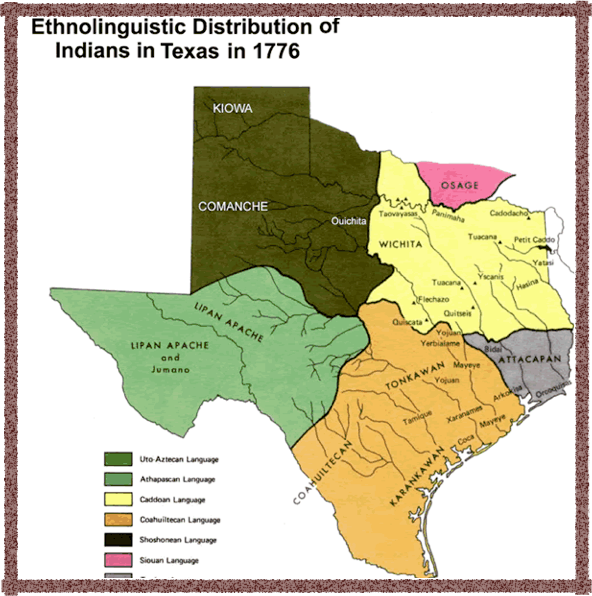
Historically, Native Americans living near the San Antonio River Valley called it “Yanaguana,” meaning “refreshing waters.” In 1691 a Spanish expedition arrived on the feast day of St. Anthony of Padua, and left the legacy of the name San Antonio. Note map of Native American Tribal languages and settlement regions in all of Texas.
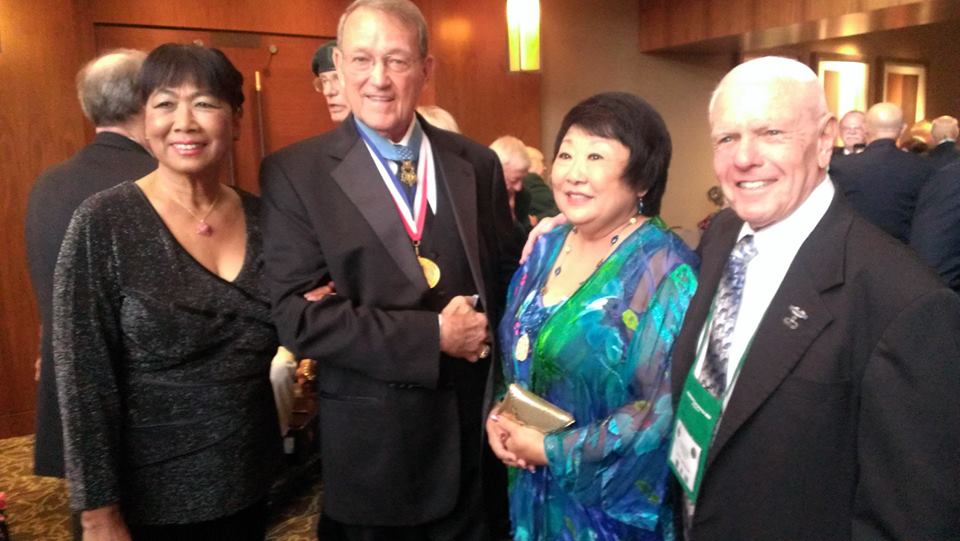
The Hyatt Regency hosted the Special Forces Associations’ many activities and took the ‘bull by the horn’ of San Antonio throughout the convention. SFA-75 VP Toby Todd has been posting on Facebook the many activities as they have been happening. This is where I plucked this image of family and friends of Col. Roger Donlon, MOH and our SFA Chapter 75 tribute personage. Other photos are from SA news sources.
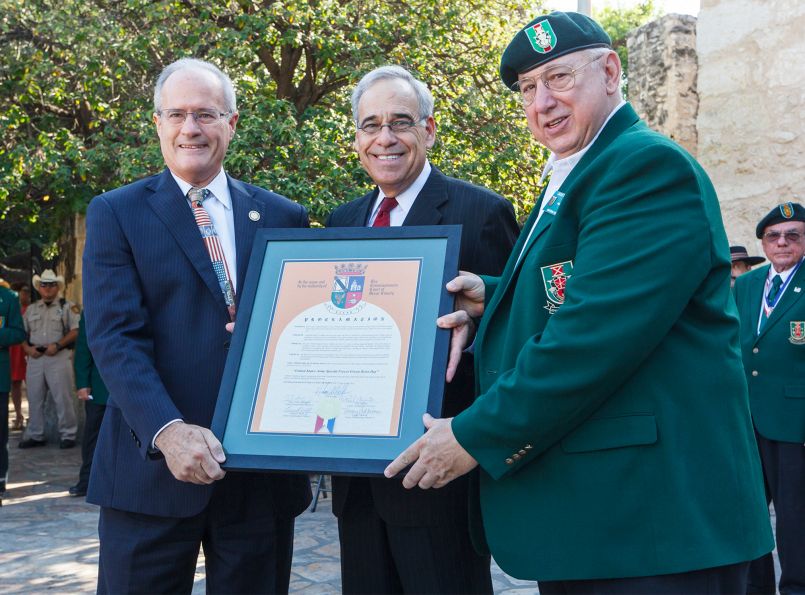
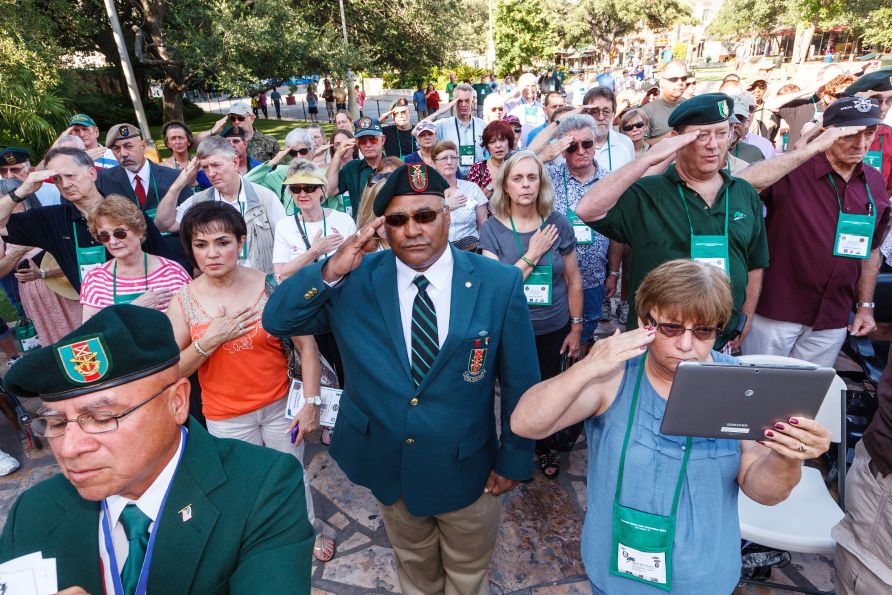
County Commissioner Tommy Adkisson (from left) and former U.S. Rep. Charlie Gonzalez give a plaque proclaiming the day as "United States Army Special Forces Green Beret Day" to Jack Tobin SFA President during a wreath-laying ceremony at the Alamo by the Special Forces Association on Saturday, June 29, 2013. Over 1,000 active and veteran U.S. Army Green Berets from across the nation gathered at the Alamo to pay tribute with colors, rifle volley and patriotic music to fallen soldiers of all conflicts.
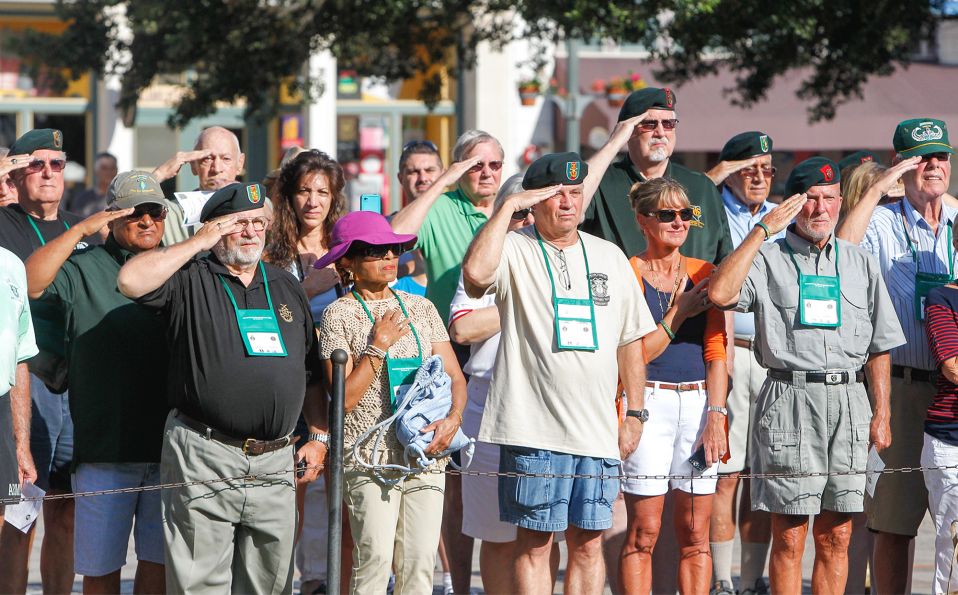
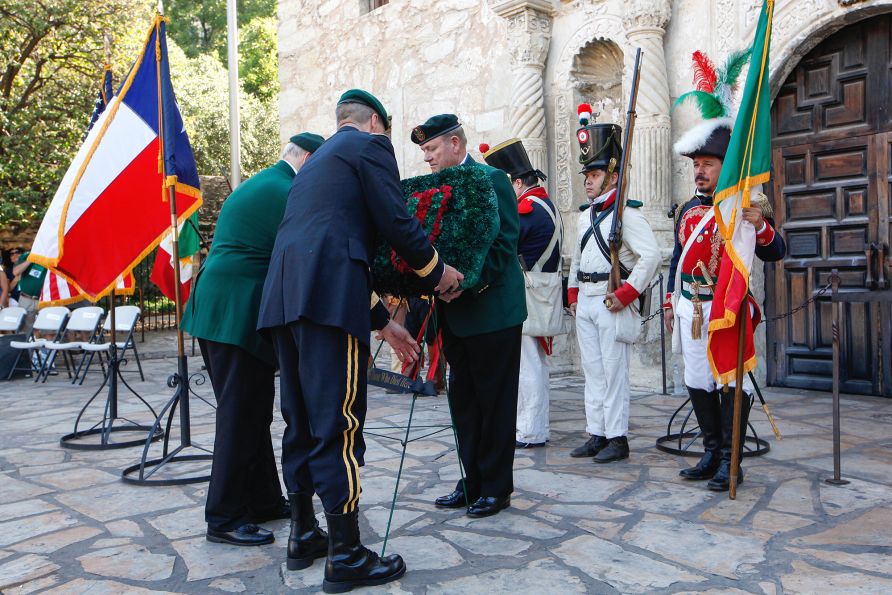
The Presentation of the Wreath by Special Forces Association Maj. Gen. (Ret.) James Champion (from left) SFA President Jack Tobin and Green Beret Foundation President Chuck Rose during a wreath-laying ceremony at the Alamo by the SFA on Saturday, June 29, 2013. Active and veteran U.S. Army Green Berets from across the nation gathered at the Alamo to pay tribute to fallen soldiers, including those who died at the Alamo in 1836.
The convention has come to a close and I am still in San Antonio until Tuesday; it is a city of contrasts between the old world and the new, the ethnic and Anglo immigrants. I am staying in the San Antonio Northern hill country. This semi-rural area dates back to some of the earliest non-Hispanic emigrants to the State of Texas. During the post 1815 cotton boom, settlers poured into Eastern Texas in search of farmland. After the USA economic Panic of 1819, many indebted Americans fled to Texas to escape creditors. By 1823, about 3,000 Americans lived in Texas. In 1824, the Mexican government, which claimed Texas, began to actively encourage the American colonization of Texas in order to promote trade and development. By 1830, about 7,000 Americans lived in Texas, outnumbering Hispanic settlers two to one. The Mexican government gave large land grants to agents, called impresarios, who contracted to travel east to recruit settlers. Many of these impresarios were widely successful, and some, like Stephen F. Austin, the most successful of all, gained great influence both with the Mexican government and the Texan settlers. European people from small rural parishes in Germany settled a county or part of a county in Texas. Typically, their neighbors had been neighbors in the Fatherland. The influence of dominant personalities moved easily among people who knew each other, and the decision to emigrate spread quickly through a population by personal contact. The migration set in motion by Friedrich Ernst drew principally from districts in Oldenburg, Westphalia, and Holstein. Many settled in the rugged Texas Hill Country to form the western end of the German Belt. The Adelsverein founded the towns of New Braunfels and Fredericksburg.
I’m
looking forward to the Wednesday San Diego Soaring Eagles dance workshop or AIWA
monthly meeting, Coronado parade July 4 and SFA participation also the Chapter
picnic at Admiral Baker Field in San Diego, CA.